
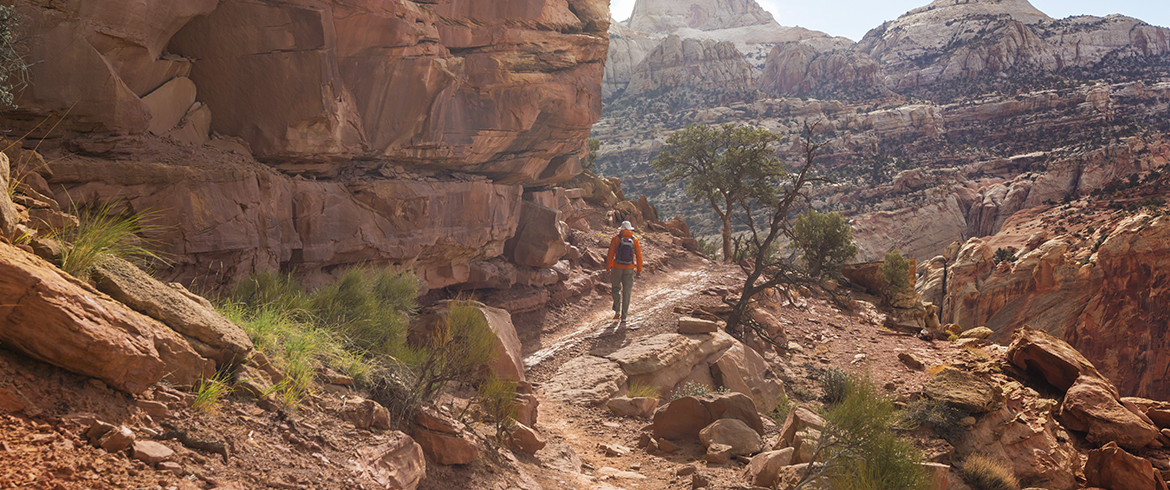
Many visitors know Zion National Park because of Zion Canyon and its famous hiking routes. The Kolob Canyons section, located in the park’s northwestern corner, receives fewer visitors but contains dramatic sandstone cliffs, narrow valleys, and several well–preserved hiking trails. One of the best–known routes is the Taylor Creek Middle Fork Trail, which combines geological formations, flowing water, historical cabins, and canyon scenery within a relatively moderate distance. This area presents another side of Zion National Park while preserving its natural landscape and historical features.
Geography of Kolob Canyons
Kolob Canyons forms the northwestern section of Zion National Park. The landscape consists mainly of sandstone cliffs, narrow side canyons, steep rock walls, and desert vegetation shaped by thousands of years of erosion. Seasonal streams continue to modify the canyon floor, creating habitats for many plant and animal species.
The scenic road through Kolob Canyons includes several overlooks where visitors can observe the layered cliffs and surrounding valleys. These viewpoints also demonstrate how erosion created the deep canyon system visible today.
Taylor Creek Middle Fork Trail
Among the area’s hiking routes, Taylor Creek Middle Fork Trail is one of the most frequently used. The trail extends approximately 2.5 miles one way, creating a total round–trip distance of about 5 miles. Elevation gain remains moderate at slightly less than 500 feet, making the route suitable for many hikers with average fitness.
The trail begins at the parking area near the visitor facilities. After descending a short staircase toward the creek, the route follows a well–marked dirt path upstream. Throughout the hike, the trail crosses Taylor Creek many times. During periods of normal water flow, most crossings can be completed without entering deep water.
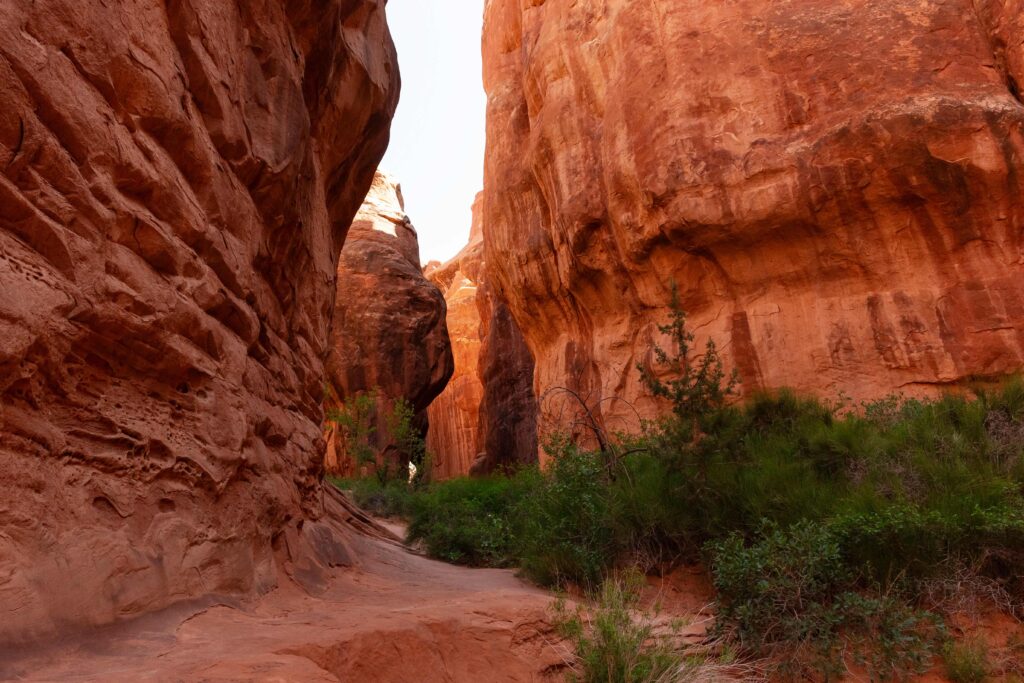
Several natural and historical features characterize the route:
- More than a dozen shallow creek crossings.
- Sandstone cliffs rising above the canyon floor.
- Historic Larson Cabin.
- Historic Fife Cabin.
- Double Arch Alcove near the end of the maintained trail.
The combination of flowing water, shaded vegetation, and canyon walls creates scenery that differs from many other hiking areas within Zion National Park.
Natural Landscape Along the Trail
The canyon narrows gradually as the hikers work upstream between Tucupit Point on the north and Paria Point on the south. Sandstone formations rise about 1,700 feet above the canyon floor and are one of the most recognizable sights in Kolob Canyons. Different plant communities also thrive on the changing terrain. Nearer the creek, where there is moisture for most of the year, larger trees and greener vegetation are evident.
The trail is generally considered easy, but includes several uneven sections. The trail runs along both sides of Taylor Creek, at times climbing over rocks or short slopes right next to the stream. The natural features are a bit of a change of pace on the hike, but still easy for most visitors in normal weather.
Two historic structures, the Larson Cabin and the Fife Cabin, were constructed in 1930 and remain as significant cultural landmarks along the trail. They illustrate how the early settlers lived in this isolated canyon prior to the area being included in Zion National Park. Today the cabins are preserved as a reminder of the human history of the region and its natural environment.
Double Arch Alcove
The maintained section of Taylor Creek Middle Fork Trail ends at Double Arch Alcove, one of the route’s most distinctive geological formations. Despite its name, the feature is not a true natural arch. Instead, it is a large recessed sandstone alcove created by erosion over thousands of years.
The colorful rock walls display different layers of sandstone, while the wide opening provides a natural viewpoint within the canyon. The formation resembles the large cliff alcoves found in other parts of the American Southwest, although no prehistoric cliff dwellings exist at this location.
Beyond Double Arch, an unofficial path continues farther upstream toward a small waterfall. However, the terrain becomes much steeper and more difficult because of landslide debris, dense vegetation, and unstable footing. This section requires greater caution and is less suitable for families with young children or visitors seeking an easy walk.
Trail Information and Visitor Experience
Taylor Creek Middle Fork Trail remains one of the more accessible hiking routes in Kolob Canyons because it combines moderate distance with limited elevation gain. The trail is open throughout most of the year, although snow and ice during winter may temporarily affect certain sections. Spring often brings higher water levels, while summer and autumn usually provide easier creek crossings.
Important trail characteristics:
- Round–trip distance of approximately 5 miles.
- Elevation gain of about 500 feet.
- Single–track dirt trail with multiple creek crossings.
- Hiking, trail running, snowshoeing, and Nordic skiing depending on season.
- Dogs are not permitted within this section of Zion National Park.
Because drinking water is unavailable along the route, hikers generally carry their supplies before beginning the walk. Vault toilets are located near the trailhead parking area, and the standard Zion National Park entrance fee applies to this section of the park.
Kolob Canyons represents an important part of Zion National Park’s diverse landscape. Its scenic drive, sandstone cliffs, quiet atmosphere, and well–preserved hiking trails provide opportunities to study geology, desert ecosystems, and regional history away from the park’s busiest locations. The Taylor Creek Middle Fork Trail illustrates these characteristics particularly well by combining flowing water, historic cabins, dramatic canyon walls, and unique rock formations within a relatively short route. Together, these natural and historical features explain why Kolob Canyons remains one of the most distinctive sections of Zion National Park and an important example of the geological processes that continue shaping the canyon landscapes of southern Utah.